Private jet hire Los Angeles to San Francisco
Private jet hire Los Angeles to San Francisco covers a 279 nautical mile hop. That is a 55 to 77 minute flight, shorter than most airline door-to-door times. This page covers airports, aircraft, timing and what drives the price.
- 279 nm321 mi
- 1h 17mturboprop trip time
- $3,000–$4,500one-way estimate
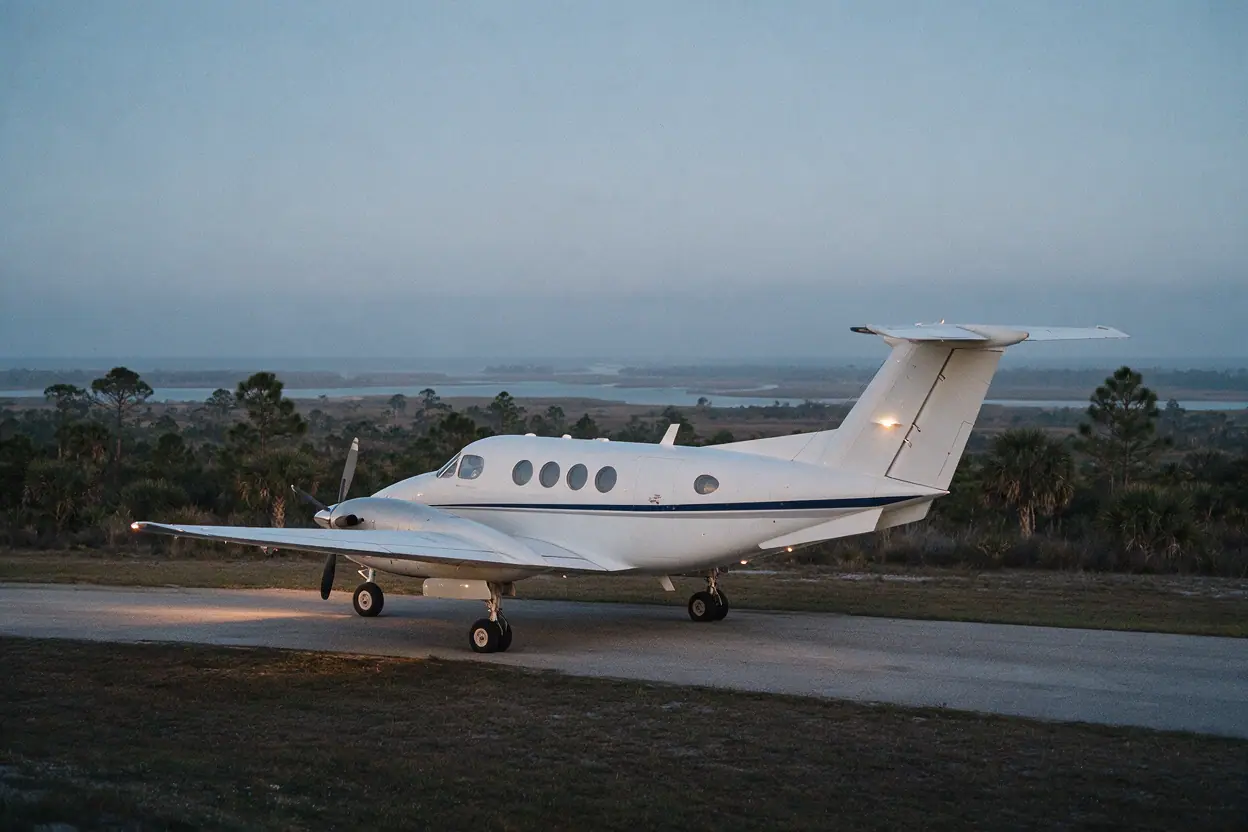
Los Angeles to San Francisco jet prices by aircraft type
From Los Angeles to San Francisco, a private jet flies 279 nautical miles in 1h 17m on a turboprop, with a one-way estimate of $3,000–$4,500.The figures below are one-way estimates for the whole aircraft, not a fare. Time in the air barely changes between a turboprop and a heavy jet on this distance, so you are buying cabin, baggage room and departure airport more than speed. Treat the ranges as a starting point; your date, airport pair and return leg move the quote. All figures are estimates.
| Jet class | Flight time | One-way est. | Notes |
|---|---|---|---|
| Turboprop | 1h 17m | $3,000–$4,500 | Best fit |
| Light jet | 0h 59m | $4,000–$6,000 | Nonstop only |
| Midsize jet | 0h 58m | $5,200–$8,000 | Nonstop only |
| Super-midsize jet | 0h 55m | $7,200–$10,000 | Nonstop only |
| Heavy jet | 0h 55m | $9,500–$14,500 | Nonstop only |
Estimates cover the whole aircraft, not each seat, before federal excise tax and segment fees. Times include taxi, climb and descent.
Airline fares against charter, Los Angeles to San Francisco
Airline figures are the lowest fares Google Flights listed for one traveller on Dec 9, 2026 (verified Nov 15, 2026); the charter line is our estimate for the entire aircraft. first class airline seats tickets for 8 travellers total roughly $1,232, versus $3,000–$4,500 for the whole turboprop.
| Choice | Airline / aircraft | Dur | One-way est. | Seat share |
|---|---|---|---|---|
| Economy airline seats | Frontier · nonstop | 1h 28m | $19 | $19 |
| First class airline seats | American · nonstop | 1h 35m | $154 | $154 |
| Turboprop | Entire plane, 8 seats max | 1h 17m | $3,000–$4,500 | $380–$560 |
Airline ticket prices shift daily and don't cover bags over the fare allowance; the per-seat charter number assumes all seats are taken.

Leaving Los Angeles
Most charter departures on this route leave from Van Nuys Airport, whose 8,001 foot runway handles the full range of aircraft, or from Hollywood Burbank with its 6,886 foot strip. LAX is the third option and usually the slowest on the ground, since you share the field with the airlines. Charter flights from Los Angeles to San Francisco can start at Van Nuys and skip the airline terminal entirely.
Where you leave from changes your drive more than your flight. If your morning meeting is downtown, Burbank is often the shorter ride north; from the Westside, Van Nuys is the usual pick. Tell us your pickup address and we match the airport to it rather than the other way around.
Arriving in the San Francisco Bay Area
San Francisco International has an 11,870 foot runway and sits 12 miles south of downtown. Oakland San Francisco Bay Airport, with 10,520 feet, puts you across the bay and often closer to the East Bay and to Berkeley meetings. When your day starts in the Financial District, San Francisco International is usually the faster arrival of the two. Clear weather in the morning often means a straight-in approach; summer fog can push arrivals to Oakland.
Fog and low ceilings are the local wildcard, and they show up most in summer. If arrival weather looks marginal, Oakland often clears first; a flexible arrival airport is worth more than a slightly faster aircraft. Your ground transport is arranged to the curb at either field. For international connections, San Francisco International has U.S. Customs and Border Protection on site, which matters if you are continuing beyond the Bay Area.
| Field | ID | Rwy |
|---|---|---|
| San Francisco International Airport | KSFO / SFO | 11,870 ft |
| Oakland San Francisco Bay Airport | KOAK / OAK | 10,520 ft |
| Van Nuys Airport | KVNY / VNY | 8,001 ft |
| Hollywood Burbank/Bob Hope Airport | KBUR / BUR | 6,886 ft |
| Los Angeles International Airport | KLAX / LAX | 12,894 ft |
How a turboprop fits this trip
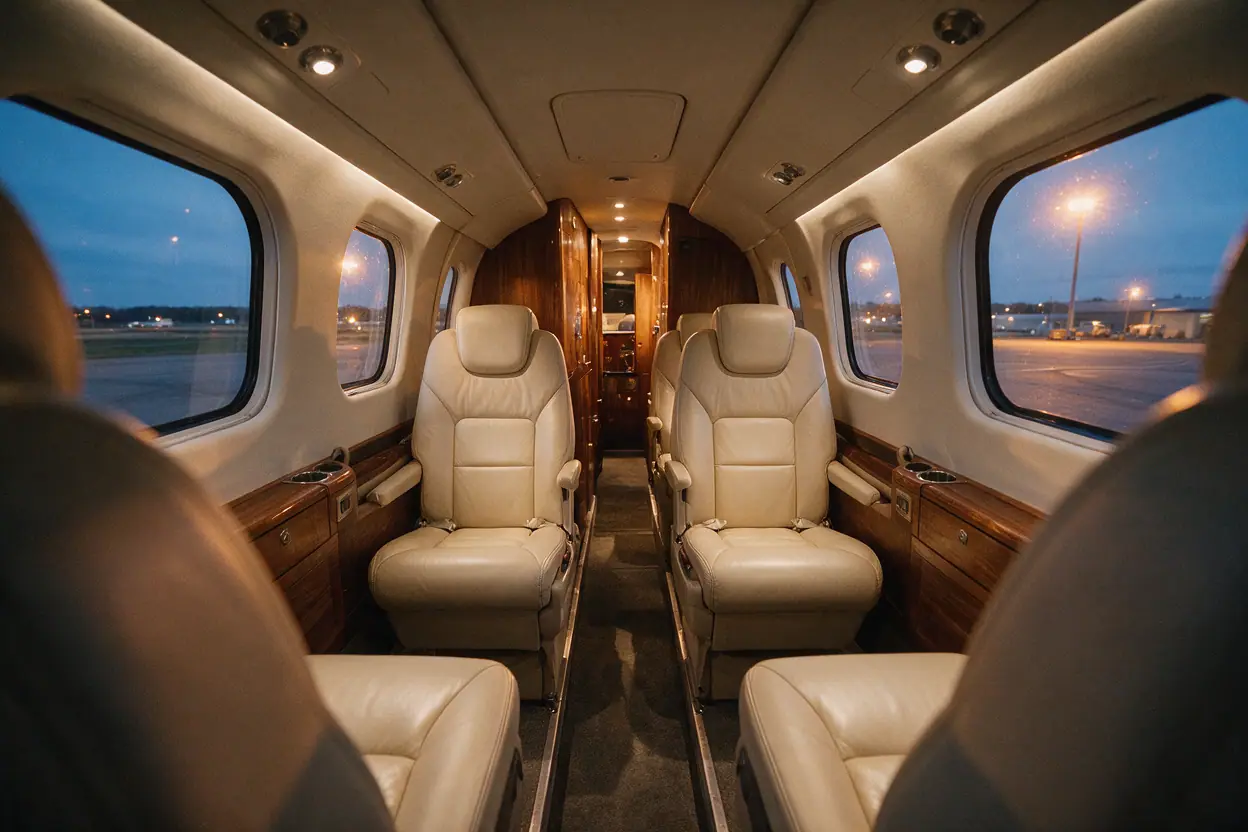
A turboprop fits this route because the trip is too short to reward jet speed. The Daher TBM 960 and Beechcraft King Air 350i both cruise above 300 knots and carry 6 to 8 passengers, and at $3,000 to $4,500 one way the turboprop band is the lowest cost on the page. A private jet hire Los Angeles to San Francisco run of 279 nm rarely needs more aircraft than a turboprop. The King Air's 55 cubic feet of baggage and 4 ft 9 in cabin height suit groups with golf bags or trade-show materials.
If you are carrying a larger group with bulky bags, a light jet at $4,000 to $6,000 or a midsize at $5,200 to $8,000 buys a quieter cabin without much time penalty. Super-midsize and heavy jets appear on this route mainly for groups, baggage or a repositioning aircraft that happens to be nearby.
Daher TBM 960
- 6 pax
- 330 kt speed
- 1,730 nm range
4 ft tall, 13 ft 3 in long cabin, 32 cu ft of baggage.
Beechcraft King Air 350i
- 8 pax
- 312 kt speed
- 1,800 nm range
4 ft 9 in tall, 16 ft 8 in long cabin, 55 cu ft of baggage.
When prices peak
Monday morning and Friday afternoon are the busiest windows on this city pair, and the Bay Area's convention and conference calendar pushes midweek rates up in the same weeks. Book a private jet hire Los Angeles to San Francisco two to three weeks ahead when your date falls on a Monday or a Friday. Weekends in October, when the Fleet Week air show crowds the waterfront, are the other tight stretch.
If your trip is a same-day meeting, the aircraft waits for you rather than repositioning, which changes the structure of the price more than the distance does. Return legs booked with the outbound leg usually cost less than two separately sourced flights, because the aircraft is not flying back empty. For groups of 6 or more comparing jets to first-class seats, the turboprop band is where the math is most favorable. When you request a quote, mention any flexibility in your date; shifting by a day can open up more aircraft and better estimates.
Other private jet trips like Los Angeles to San Francisco
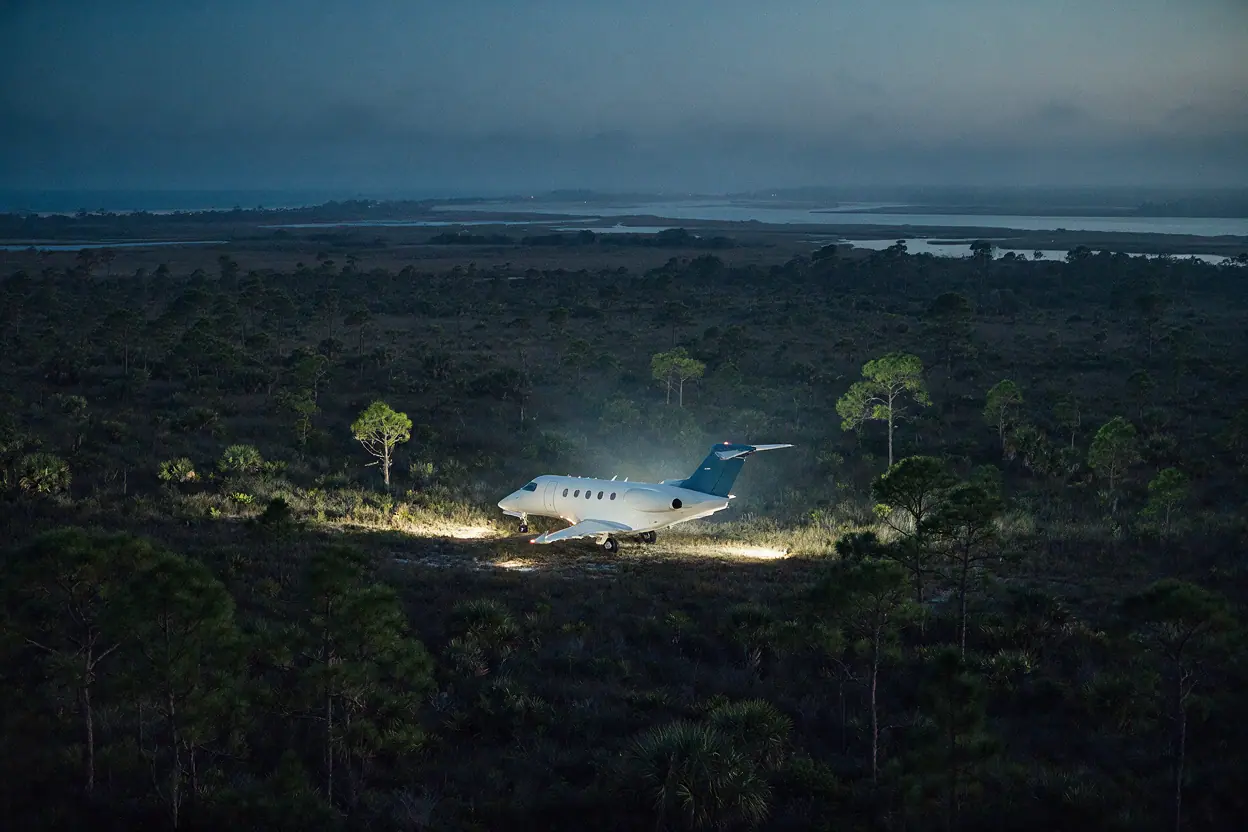
These 6 private jet city pairs span 96 to 643 nautical miles; one-way turboprop estimates run $2,200 to $9,000.
This route FAQ
How much does private jet hire Los Angeles to San Francisco cost?
Estimates run from $3,000 to $4,500 one way for a turboprop, $4,000 to $6,000 for a light jet, $5,200 to $8,000 for a midsize, $7,200 to $10,000 for a super-midsize and $9,500 to $14,500 for a heavy. These are ranges for the whole aircraft across 279 nautical miles, and your date, airport pair and return leg set the final quote.
How long is the flight from Los Angeles to San Francisco by private jet?
The turboprop takes about 1 hour 17 minutes, and the jets drop that to 59 minutes in light class, 58 in midsize and 55 in super-midsize and heavy. The gap between classes is minutes, not hours, so cabin size and departure airport matter more than speed on this 279 nautical mile route.
Which airports serve private jet hire Los Angeles to San Francisco?
From Los Angeles you have Van Nuys, Hollywood Burbank and LAX. Into the Bay Area you have San Francisco International and Oakland. Van Nuys has more length and less airline traffic than Burbank, while Oakland is often the more convenient arrival for East Bay meetings.
Do I need a jet for a 279 nautical mile trip?
No. The distance is the reason a turboprop fits: the TBM 960 and King Air 350i cruise above 300 knots and land within minutes of a light jet, at $3,000 to $4,500 one way. Book a jet only if the group, the baggage or the cabin matters more than the cost.
Can I make a same-day return between Los Angeles and San Francisco?
Yes, and it is the common pattern. The aircraft stays with you while you attend meetings, so the return leg is a scheduled departure of your own rather than a new trip. Booking the return with the outbound usually costs less than sourcing two separate flights.
When should I book a private jet hire Los Angeles to San Francisco flight?
Two to three weeks ahead for a Monday or Friday departure, when demand peaks. Weekends during Fleet Week in October are the other tight stretch. Shorter notice is workable, but the aircraft left to choose from shrinks and the estimate moves up.